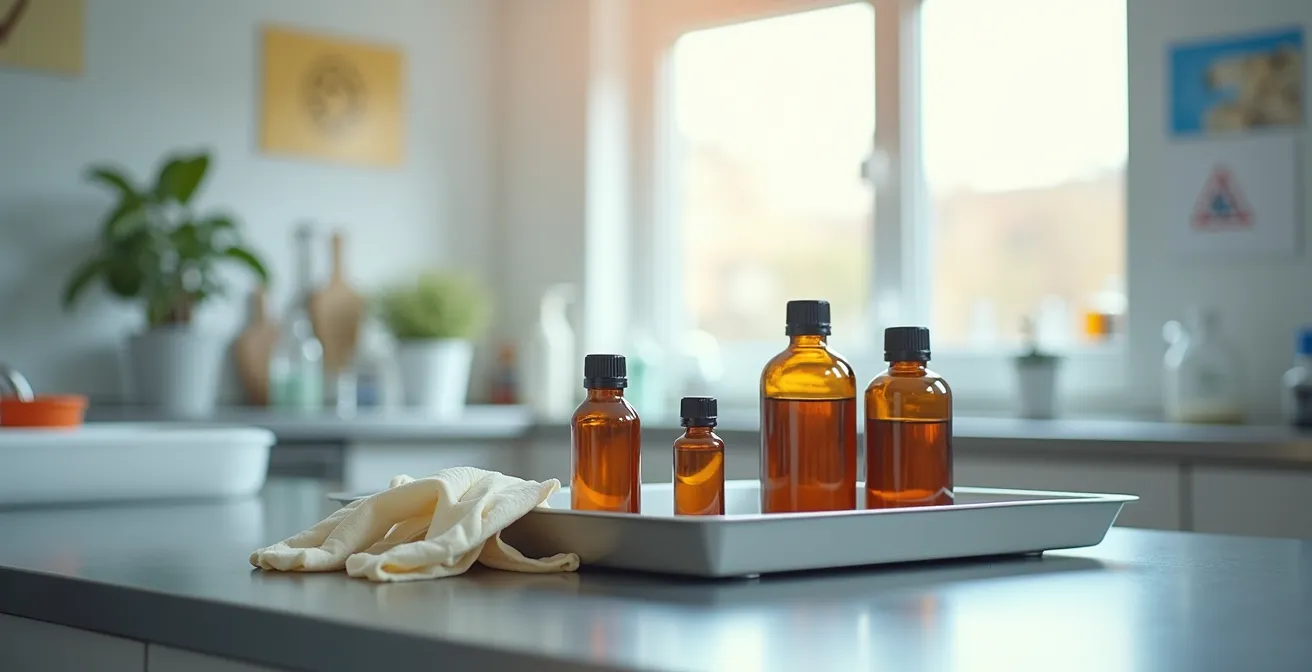
Contrary to popular belief, the primary danger of liquid nicotine is not the lethal dose, which is difficult to reach, but rather the risk of systemic poisoning through simple skin contact or accidental ingestion.
- A simple splash on the skin allows nicotine to enter the bloodstream directly, causing severe symptoms even at low doses.
- A few milliliters accidentally ingested by a child can have fatal consequences due to their low body weight.
Recommendation: Treat every vial of concentrated nicotine not as a consumer product, but as a laboratory chemical agent requiring a strict handling protocol.
For the DIY vaping enthusiast, handling nicotine bases and boosters is routine. We mix, we transfer, we store. Over time, familiarity can lead to forgetting a fundamental truth: concentrated liquid nicotine is not a simple flavoring; it is a powerful chemical agent, classified as a poison. Many reassure themselves by citing a supposedly very high lethal dose, but this ignores the real nature of the risk. The most common and insidious danger does not come from massive voluntary ingestion, but from everyday accidents: a splash on an un-gloved hand, a spilled vial, or an improperly identified container.
Common advice like “wear gloves” or “keep out of reach of children” is essential, but often perceived as precautionary principles rather than absolute necessities. This perception is dangerous. It masks the toxicological reality of the product. The skin is not an infallible barrier; it is a direct entry point to your bloodstream. A simple reusable water bottle used to store your base can become a deadly trap for a visitor or a child. True safety lies not in the approximate knowledge of a lethal dose, but in understanding the mechanisms of contamination and the rigorous application of safety protocols, just as one would in a laboratory.
This article goes beyond generic warnings. By adopting the perspective of a chemical safety expert, we will dissect the concrete risks associated with each handling error. The goal is not to frighten, but to transform vague caution into protocol-based respect. We will see why a single drop on the skin requires immediate action, how to contain a spill to protect your family and pets, and what scientific data actually says about dangerous quantities. You will learn to view each vial not as part of your hobby, but as what it is: a substance that demands total control, from purchase to disposal.
To guide you through the critical aspects of safe nicotine handling, this article is structured to answer the most urgent and often misunderstood questions. Below is a summary of the protocols and explanations we will cover.
Summary: Safety Protocols for Handling Concentrated Nicotine
- Skin absorption: why a 20mg splash requires immediate washing?
- The mistake of transferring nicotine into a water or food bottle
- How to pick up a broken vial from the floor without contaminating your pets?
- Myth vs. Reality: what actual amount puts an adult in mortal danger?
- Soaked clothing: should you throw it away or wash it at high temperature?
- The mistake of transferring into a non-CRC container in the presence of children
- Pulmonary lipidosis: why you should never vape essential oils or syrups?
- Empty vials: how to give them a second life or recycle them correctly?
Skin absorption: why a 20mg splash requires immediate washing?
One of the most frequent errors is underestimating the permeability of the skin. Nicotine is a lipophilic molecule, meaning it dissolves easily in fats and can therefore cross the epidermal barrier to reach the blood capillaries directly. A splash is not a simple surface contact; it is the beginning of percutaneous absorption that can lead to systemic poisoning. Symptoms can appear quickly: nausea, dizziness, paleness, accelerated heart rate, and excessive sweating. These signs indicate that nicotine has entered your system and is beginning to act on your central nervous system.
In Canada, regulations are strict: the maximum concentration of nicotine in vaping products is limited. According to Canadian vaping product regulations, this limit is set at 20 mg/mL maximum, with mandatory child-resistant packaging. Although this concentration is lower than imported bases used in the past, it remains high enough that significant skin exposure is dangerous. A small amount of 20 mg/mL liquid spilled on a hand can contain several milligrams of pure nicotine, which will begin to be absorbed immediately. Immediate action is therefore not an excessive precaution, but a necessary emergency response to limit the dose absorbed by the body. The skin should be viewed not as armor, but as a sponge.
Your action plan: First aid protocol for skin contact
- Immediately remove any contaminated clothing, avoiding contact with bare skin.
- Wash the exposed skin area thoroughly with lukewarm water and soap for at least 15 minutes.
- Avoid using aggressive or alkaline cleaning solutions, which could actually increase nicotine absorption.
- Carefully monitor for symptoms of poisoning: vomiting, abdominal pain, hypersalivation, paleness, or abnormal sweating.
- In case of symptoms or significant contact, contact the Quebec Poison Control Centre (1-800-463-5060) or your local center without delay, specifying the product, its concentration, and the contact area.
The mistake of transferring nicotine into a water or food bottle
Transferring nicotine into containers not designed for that purpose is a major safety failure. Using a soda bottle, a syrup flask, or even a simple water bottle to store your nicotine base creates an extremely high risk of accidental poisoning. The human brain instinctively associates a container with its habitual use. A water bottle on a kitchen counter is perceived as a source of hydration, not as a poison. A guest, a family member, or worse, a child, could ingest it thinking it is a harmless drink.
Improvised labeling with a marker is not enough. Ink can fade, labels can peel off, and in a moment of inattention, the familiar shape of the container overrides the warning. The only safe practice is the use of dedicated, opaque, and correctly labeled containers. Amber glass vials or opaque PET plastic bottles are ideal, as they protect the nicotine from degradation by UV light. Furthermore, they must imperatively be fitted with a child-resistant cap (CRC) and carry a clear, indelible label indicating “NICOTINE – POISON” with the WHMIS skull and crossbones pictogram.
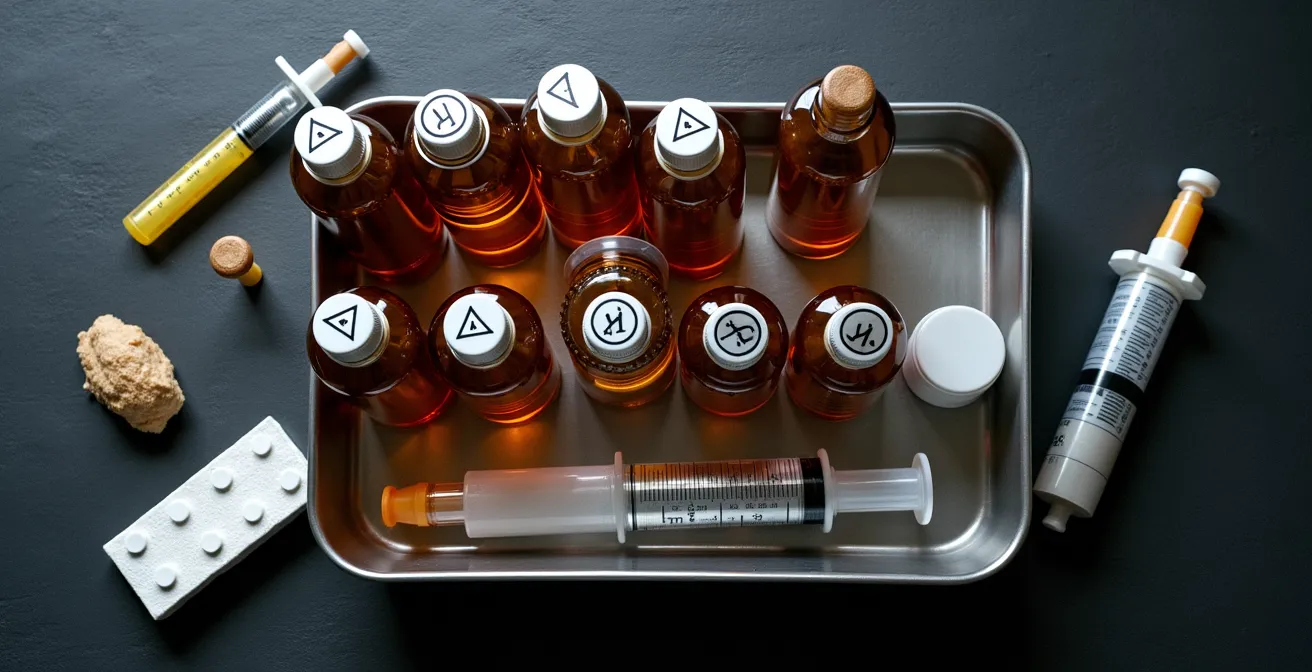
The transfer itself must be a controlled procedure. Perform it on a stable, clean, and non-porous surface, ideally a metal or plastic containment tray. Use dedicated measuring equipment (graduated syringes, cylinders) that will only be used for this purpose. Anything that comes into contact with concentrated nicotine must be considered contaminated and managed as such. This rigor is not an option; it is the only barrier between a routine manipulation and a potential tragedy.
How to pick up a broken vial from the floor without contaminating your pets?
Accidents happen quickly: a vial slips from your hands and shatters on the floor. The instinctive reaction is to grab a sponge or paper towel to clean it up. This is a mistake that can lead to widespread contamination. The liquid spreads, seeps into tile grout or carpet fibers, and contaminated glass shards scatter. For pets, whose sense of smell leads them to explore the floor, the danger is immense. They can walk through the liquid and absorb it through their paws, or worse, lick the contaminated area, leading to rapid and potentially fatal poisoning.
Faced with such a spill, a confinement and decontamination protocol must be applied in three steps. 1. Secure the area: The absolute priority is to isolate the area. Immediately have everyone and all pets leave the room and close the door to prevent vapors (if the product is heated) or contaminants from dispersing. Put on your personal protective equipment (PPE): nitrile or latex gloves and safety goggles. 2. Confinement and absorption: Never dry sweep! This would spray contaminated droplets. Start by picking up the largest pieces of glass with tongs (never bare hands) and place them in a rigid, sealable container (like a glass jar). Next, generously cover the liquid puddle with an absorbent material like cat litter, sand, or a specific absorbent powder. Let it sit for a few minutes so the liquid is completely captured. 3. Cleaning and disposal: Once the liquid is absorbed, pick up the contaminated powder using a dedicated dustpan and brush, and place everything in a sturdy, leak-proof trash bag. Then, clean the area with soapy water several times, using paper towels that you will throw into the same bag. Seal the bag, then place it inside a second bag. The entire package is considered hazardous waste and must be taken to an appropriate municipal collection point, not thrown in the household trash.
Myth vs. Reality: what actual amount puts an adult in mortal danger?
The question of the lethal dose of nicotine is surrounded by myths and misinformation. For decades, a value of 30 to 60 mg was cited as being fatal for an adult, a figure based on dubious 19th-century self-experimentation. This estimate significantly contributed to an exaggerated perception of the risk of mortality from ingestion, while masking the real dangers of non-lethal poisoning. More recent research has radically revised this estimate upward. Today, the scientific consensus is quite different.
The reference study on the subject, led by toxicologist Bernd Mayer, re-evaluated the acute toxicity of nicotine. The study concludes that the lethal dose 50 (LD50)—the dose that would be fatal for 50% of a population—is much higher. The analysis, published in *Archives of Toxicology*, estimates that an ingestion of 500 to 1000 mg of nicotine, or an LD50 of 6.5 to 13 mg/kg of body weight, would be required. This means that a 70 kg adult would have to ingest a massive amount of nicotine for their life to be in immediate danger.
The lethal dose of nicotine is estimated between 500 and 1000 mg. An adult would have to drink at least three to six 10 mL bottles at 20 mg/mL (and without vomiting!) to put their life at risk.
– Dr. Bernd Mayer, Specialist in Pharmacology and Toxicology, University of Graz
However, it would be extremely dangerous to conclude that nicotine is not a poison. This revision of the LD50 does not change the fact that much lower doses can cause severe poisoning. Vomiting is a powerful defensive reflex of the body that generally expels the substance before the lethal dose is fully absorbed. The real danger for an adult lies in the serious symptoms (seizures, respiratory distress, cardiac arrhythmia) that can occur well below the fatal threshold, especially in cases of prolonged skin exposure or ingestion of moderate amounts.
Soaked clothing: should you throw it away or wash it at high temperature?
Spilling a vial of nicotine on your clothes is not trivial. The fabric acts as a compress, maintaining prolonged contact with the skin. This situation is even more dangerous than a simple splash because the source of exposure remains active as long as the clothing is not removed. Body heat can even accelerate the rate of nicotine absorption through the skin. The first action must therefore be to remove the contaminated clothing as quickly as possible, taking care not to spread the liquid to other parts of the body.
The question then arises: what to do with the clothing? The answer depends on the extent of the contamination. For a small splash (a few drops), decontamination is possible. You must first handle the garment with gloves, hand-wash the affected area with soap and water, and then run it through the washing machine alone on a high-temperature cycle (60°C or more). This procedure aims to dilute and degrade the remaining nicotine. It is crucial not to mix the contaminated garment with the rest of the laundry to avoid cross-contamination.
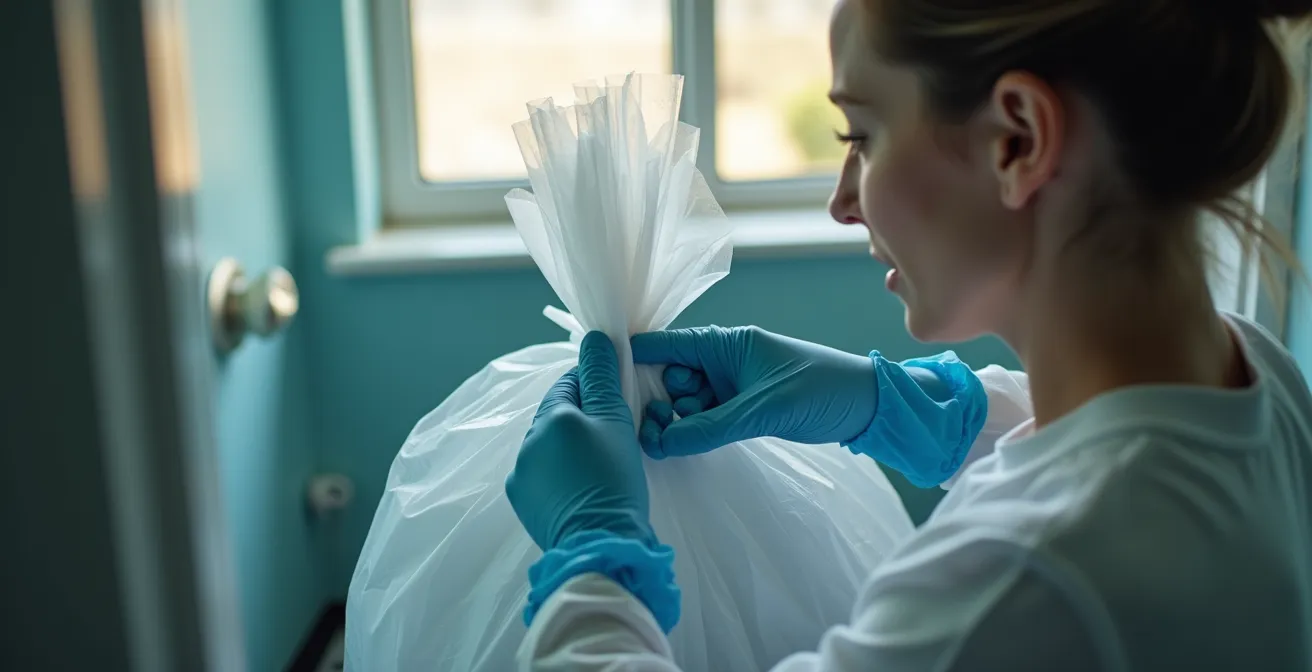
In the event of significant contamination (a large portion of the vial spilled), caution dictates considering the garment as irretrievable hazardous waste. Attempting to wash it might not eliminate all the nicotine and would expose the washing machine and future cycles to residual contamination. The correct protocol is to handle the garment with gloves, place it in a sturdy trash bag, hermetically seal that bag, then double-bag it. This waste should then be taken to an eco-center or a waste facility that accepts household hazardous waste (HHW), in accordance with your municipal regulations in Canada.
The mistake of transferring into a non-CRC container in the presence of children
While the lethal dose for an adult has been revised upward, the situation is radically different for a child. Their low body weight, different metabolism, and natural curiosity make them particularly vulnerable victims of nicotine poisoning. The danger is multiplied, and an amount of liquid that would cause moderate symptoms in an adult can prove fatal for a young child. This is why using containers without child-resistant caps (CRC) is a form of negligence with potentially dramatic consequences.
E-liquids with candy, fruit, or dessert flavors can be particularly attractive to children, who cannot distinguish between a vaping bottle and a treat. A moment of inattention is enough. If a child manages to open a bottle and ingest even a few milliliters, the consequences can be rapid and severe: violent vomiting, seizures, heart rhythm disorders, and respiratory distress. The risk is so high that Canadian regulations have made CRC caps mandatory on all vaping products containing nicotine.
Case Study: The Critical Risk of Poisoning for Those Under 20 kg
The danger is directly proportional to the weight of the victim. In children, their low body mass means that ingesting a very small amount of highly concentrated liquid can be extremely serious. According to a poisoning risk analysis, a dose of only 10 mg can be enough to cause serious disorders in a child weighing less than 20 kg. This corresponds to only 0.5 mL of an e-liquid dosed at 20 mg/mL, or about ten drops. This reality highlights why storage in non-secured and accessible containers constitutes an unacceptable risk in the presence of children.
Safety does not stop at the cap. Storage is equally crucial. Nicotine vials, even those with a CRC cap, should always be kept in a high place, out of sight and reach of children, ideally in a locked cabinet. Never leave a bottle lying on a coffee table or counter, even for a few minutes.
Pulmonary lipidosis: why you should never vape essential oils or syrups?
The world of DIY can encourage experimentation, but certain boundaries must never be crossed. One of the most dangerous is the idea of adding substances not designed for inhalation into an e-liquid, such as essential oils, vegetable oils (like oil-based CBD), syrups, or any other oily substance. The lungs are designed to process air, not lipids. Inhaling oil droplets can cause a severe inflammatory reaction known as exogenous pulmonary lipidosis.
This pathology was highlighted during the 2019-2020 e-cigarette or vaping use-associated lung injury (EVALI) crisis. The investigation quickly identified a primary culprit: Vitamin E acetate, an oily thickening agent added illegally to cannabis vaping cartridges. An analysis by the Public Health Agency of Canada showed that while the problem was less widespread in Canada than in the United States, the mechanism of danger remains the same. Inhaled lipids settle in the pulmonary alveoli and destroy surfactant, an essential substance that lines the lungs and enables gas exchange. Without surfactant, the lungs can no longer function correctly, leading to acute respiratory distress.
The danger at the pulmonary level does not come from the THC molecule itself, but from the associated lipids that destroy the lung surfactant.
– Pr. Bertrand Dautzenberg, Tobacco Specialist, via Medscape
The rule is therefore absolute: only vape products specifically formulated for this use. Standard e-liquids are composed of propylene glycol (PG) and vegetable glycerin (VG), which are alcohols that vaporize without leaving lipid residues. Attempting to add oils of any kind is playing Russian roulette with your pulmonary health. The flavors used in vaping are also specifically selected for their relative safety for inhalation, which is absolutely not the case for essential oils or oil-based food flavorings.
Key Takeaways
- Nicotine is a chemical poison whose primary danger lies in accidental exposure (skin contact, ingestion), not just the lethal dose.
- A strict protocol is necessary for all handling: wear gloves, use secured containers (CRC), and store out of reach of children.
- Never inhale oily substances (essential oils, syrups); this can cause potentially fatal pulmonary lipidosis.
Empty vials: how to give them a second life or recycle them correctly?
Managing a nicotine vial does not end when the last drop has been used. An “empty” bottle still contains nicotine residues on its walls, making it unsuitable for reuse for food or cosmetic products. Turning an old booster vial into a container for cooking oil or a homemade lotion is an extremely dangerous practice that creates a risk of cross-contamination and chronic low-dose poisoning.
If these vials are to be given a second life, it must be strictly limited to non-consumable products that are not applied to the skin, such as solvents or cleaning products, and only on the condition that the bottle is thoroughly rinsed and clearly re-labeled. The original label must be completely removed and replaced with a new one, unambiguously indicating the new contents to avoid any confusion. However, the safest practice remains recycling or disposal.
Recycling nicotine vials requires a prior decontamination protocol. Here are the steps to follow:
Your roadmap: Safe recycling of nicotine vials
- Wear protective gloves when handling the vials, even empty ones.
- Perform a triple rinse of the bottle with cold water to dilute the nicotine residues as much as possible. The highly diluted rinse water can be flushed down the toilet.
- Identify the type of plastic of the vial (usually PET or HDPE) using the triangular recycling symbol.
- Consult your municipal sorting guidelines in Canada. Some require caps to be removed, others do not. This is the most important step as rules vary locally.
- Place the clean vial in the appropriate recycling bin. If your municipality requires it, bottles that have contained toxic products must be taken to an eco-center or a hazardous waste collection point.
Adopting a chemical safety culture is the final and most important step for any DIY enthusiast. To evaluate and improve your own practices, it is recommended to conduct a full audit of your equipment and procedures.